
Home › Products › Battery Materials › Cathode & Anode Powders › for Li-ion Batteries › Lithium Nickel Manganese Cobalt Oxide (NMC)
Lithium Nickel Manganese Cobalt Oxide (NMC) Powders
Cathode Powders for Lithium-ion Batteries
Commonly referred to as “NMC,” Lithium Nickel Manganese Cobalt Oxide (LiNixMnyCo1-x-yO2) cathode material is a mixed metal layered oxide, meaning the crystal has a layered structure with nickel, manganese and cobalt occupying lattice sites. NMC is a derivative of lithium cobalt oxide, which was the first metal oxide to be used in commercial rechargeable lithium-ion batteries.
With x and y in the chemical formula of NMC being variable, one can create NMC materials with a multitude of different ratios of nickel, manganese, and cobalt. Only nickel and cobalt contribute to the capacity, as the valence state of manganese stays the same during charge and discharge (redox reactions). Manganese provides stability to the structure, while nickel helps with providing capacity (and consequently energy density). NMC111 was the first NMC material to be commercialized, but was soon replaced by NMC532 and then NMC622. NMC811 and Nickel-rich NMCs like NMC85 and NMC926 are now being implemented in batteries.
Quick Links
Commercial NMC Powders
NEI is currently supplying six different compositions of uncoated NMC powders: NMC111/333, NMC532, NMC622, NMC811, NMC85, and NMC926. While NEI doesn’t produce these specific materials, you can expect the same quality as our own NANOMYTE® product line. These NMC cathode materials are also available as a cast electrode sheets (tape / film).
Additionally, NEI can apply a thin, in-house Lithium Niobate (LiNbO3) coating on any of these NMC powders upon request.
Learn More
Select a tab below to learn more about each NMC powder, including links to our technical and safety data sheets, review ordering information, or request a quote.
NMC111
CBP-50 (“NMC111”)
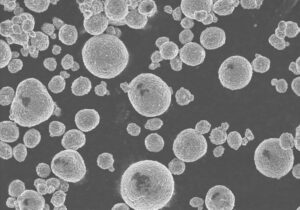
NEI’s NMC111 powder is a mixed-metal layered cathode material with equal proportions of nickel, manganese, and cobalt that provides a compromise between energy density, safety, and cycle life, making it a foundational material in the battery industry. This material, also sometimes referred to as NMC333, was the first NMC composition to be commercialized and was prized for its balanced performance, offering a stable and reliable solution for early lithium-ion batteries. While NMC111 may not offer the high-end energy density of modern NMCs, its unmatched safety, longevity, and manufacturing maturity make it a preferred choice for applications where reliability and stability are more critical than having the absolute highest capacity.
CBP-50 is available in quantities of 250g, 500g, 1kg, & 5kg (larger quantities available upon request).
Product Specifications:
- Formula: LiNi0.33Mn0.33Co0.33O2
- Crystal Structure: Layered
- Morphology: Polycrystalline
- Surface Coating: None (we also offer LiNbO3-coated powder)
- Average Particle Size (D50): 11 µm
- Typical First Charge Capacity: 170 mAh/g
- Typical First Discharge Capacity: 150 mAh/g
View/Download Specification Sheet (pdf) ↓
Product Safety Information:
- Component Name: Lithium Nickel Manganese Cobalt Oxide
- Synonyms: NMC111, NMC333
- CAS #: 346417-97-8
- Hazard Classifications: Skin sensitization (Category 1, H317); Carcinogenicity (Category 2, H351)
Precautions for Safe Handling
Appropriate personal protective equipment should be used at all times. Provide appropriate exhaust ventilation at places where dust is formed. Avoid prolonged or repeated breathing of dust. Avoid contact with eyes and skin. Wash hands thoroughly after handling.
Conditions for Safe Storage
Keep container tightly closed in a dry and well-ventilated place. Avoid moisture.
For complete information on the safe use of this material, please refer to the Safety Data Sheet:
View/Download Safety Data Sheet (pdf) ↓
NMC532
NMC622
NMC811
NMC85
NMC926
Coated NMCs
Technical Downloads
Ordering Information
RFQ
Updated September 8, 2026